pigment(o)
A local service in Rotterdam that collects leftover make-up and turns it into paint — revived colours
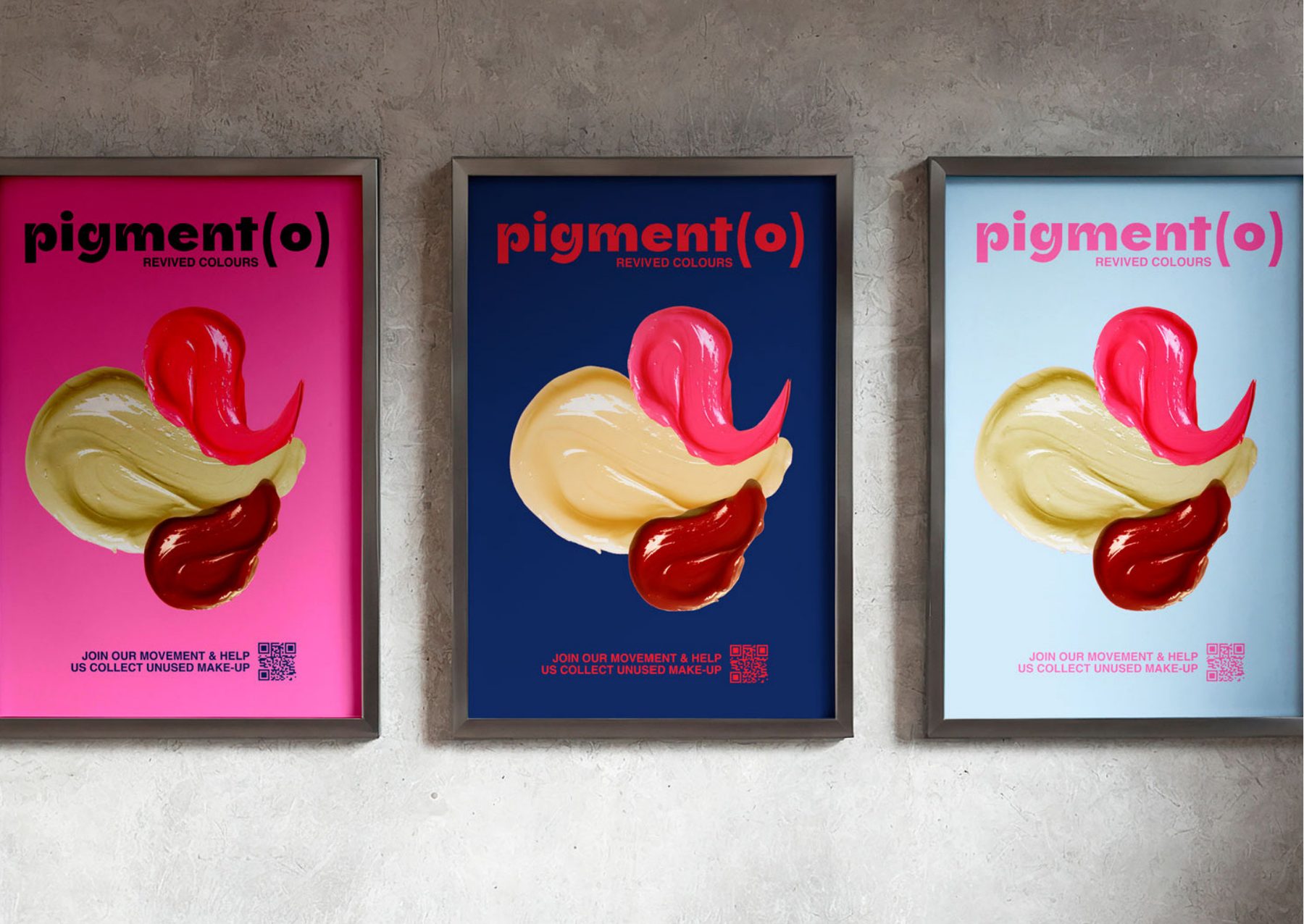
People and make-up stores get rid of unused or expired make-up in the most environmentally friendly way — and the pigments get a new life on canvas.
1
ResearchMake-up & paint
1.1Make-up industry
Bought for trends, left in the drawer.
The beauty industry keeps growing — Europeans spent over €95.7 billion on cosmetics in 2023 — and produces 120 billion packaging units a year, 62% of them not recyclable. Social media push fast-changing trends and cheap products, especially to younger generations.
About 10% of beauty products are wasted along the supply chain through testers, unsold stock and expired items, and around 30% go unused after purchase. Glitter and leave-on products add microplastics to the problem.
1.2Paint pollution
58% of the microplastics in the world’s waterways.
Around 1.9 million tonnes of paint end up in the oceans every year, and over a third of the leakage comes from waste mismanagement — in professional coatings as much as in hobby paint for canvas and paper.
Polymer binders and volatile compounds make paint a pollutant. Reusing existing materials instead of manufacturing new ones could help.
1.3Design journey
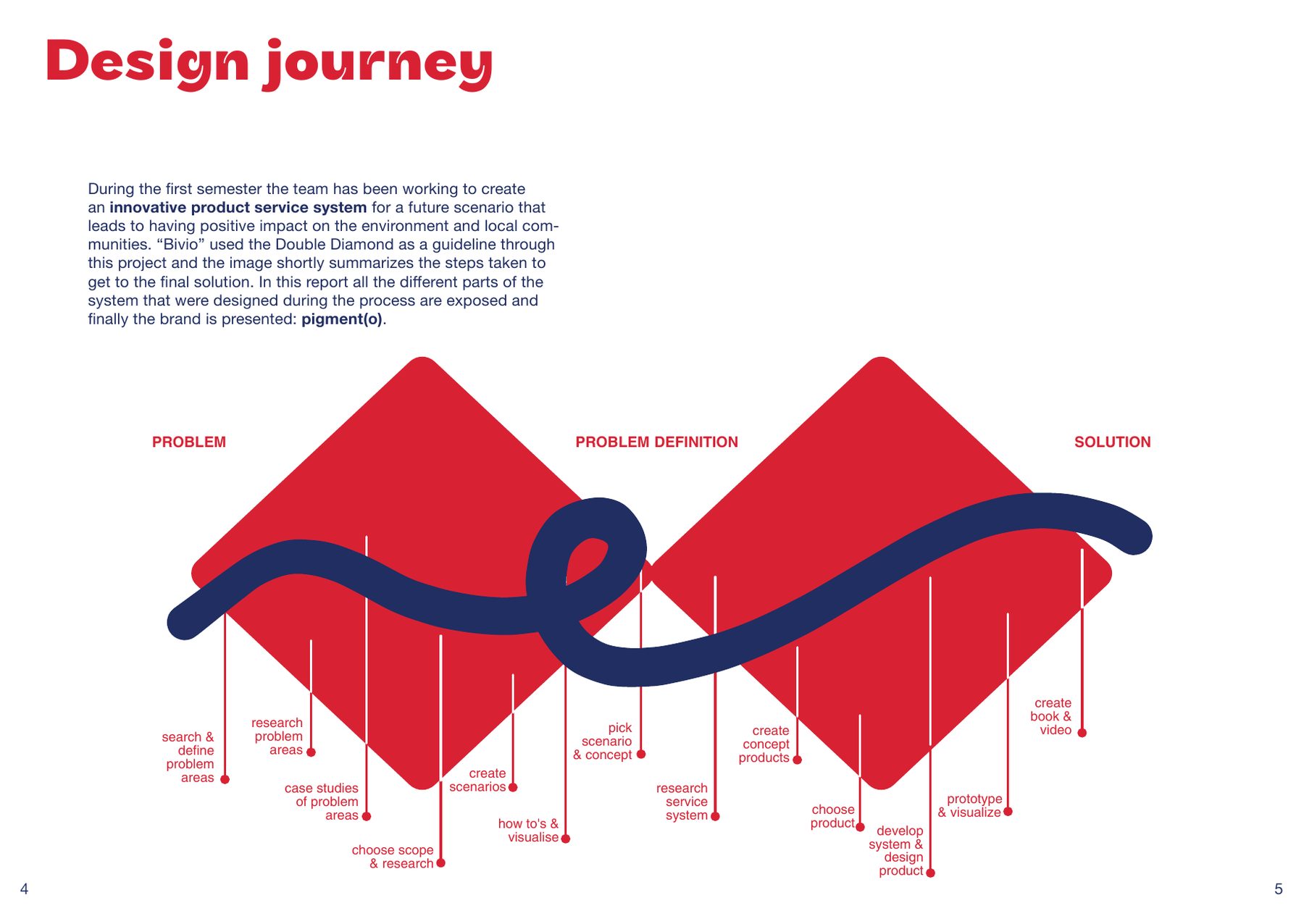
A double diamond, from problem areas to a brand.
Over one semester the Bivio team followed the double diamond: researching problem areas, building scenarios, studying cases such as The Body Shop — whose lessons were actions instead of words, listening to users, transparency is key — and then developing the product, the service system and the brand.
2
ScenarioRotterdam, 2030
2.1How might we
From a face to a canvas.
How might we bring people to re-purpose their make-up leftovers as ingredients for new creative tools — and what might these tools be?
Source: the team’s online survey, 80 answers.
2.2Trends
Arts and crafts, sustainability, transparency.
Arts & crafts
Hands-on activities improve wellbeing and fight loneliness; sip-and-paint nights welcome people with no experience.
Sustainability
Regulation, investors and consumers push companies to adopt sustainable practices — and to move faster.
Transparency
Greenwashing makes proof essential: 86% of Americans say transparency matters more than ever.
3
LocationRotterdam
3.1Why Rotterdam
Young, multicultural, full of art.
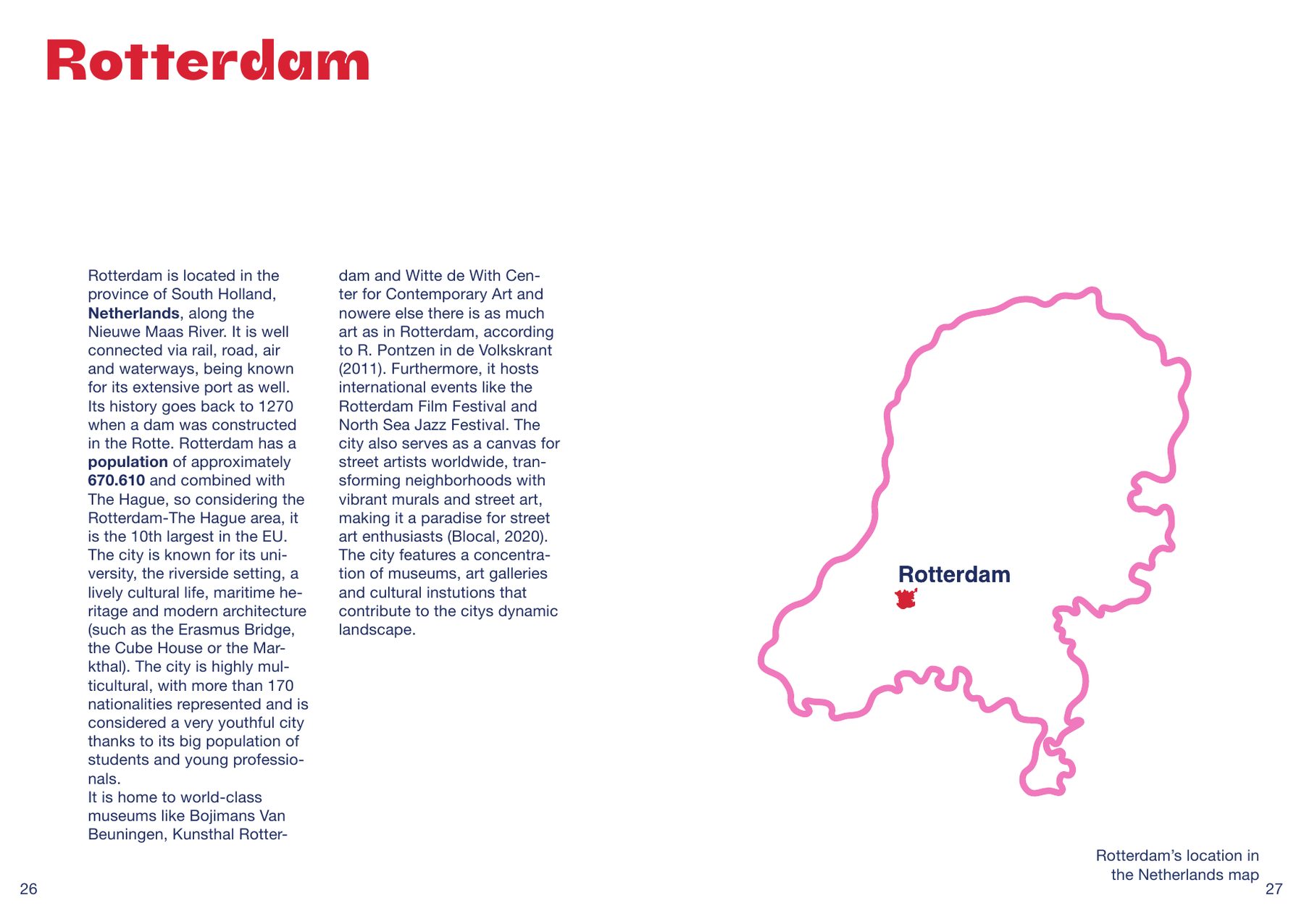
Rotterdam is young — students and young professionals, more than 170 nationalities — full of museums, galleries and street art, and aims for circularity as the norm by 2030. Gen Z and Millennials follow make-up trends but also care about sustainability, and the city already offers many sip-and-paint workshops.
3.2Collection & selling points
Stores to collect, workshops to sell.
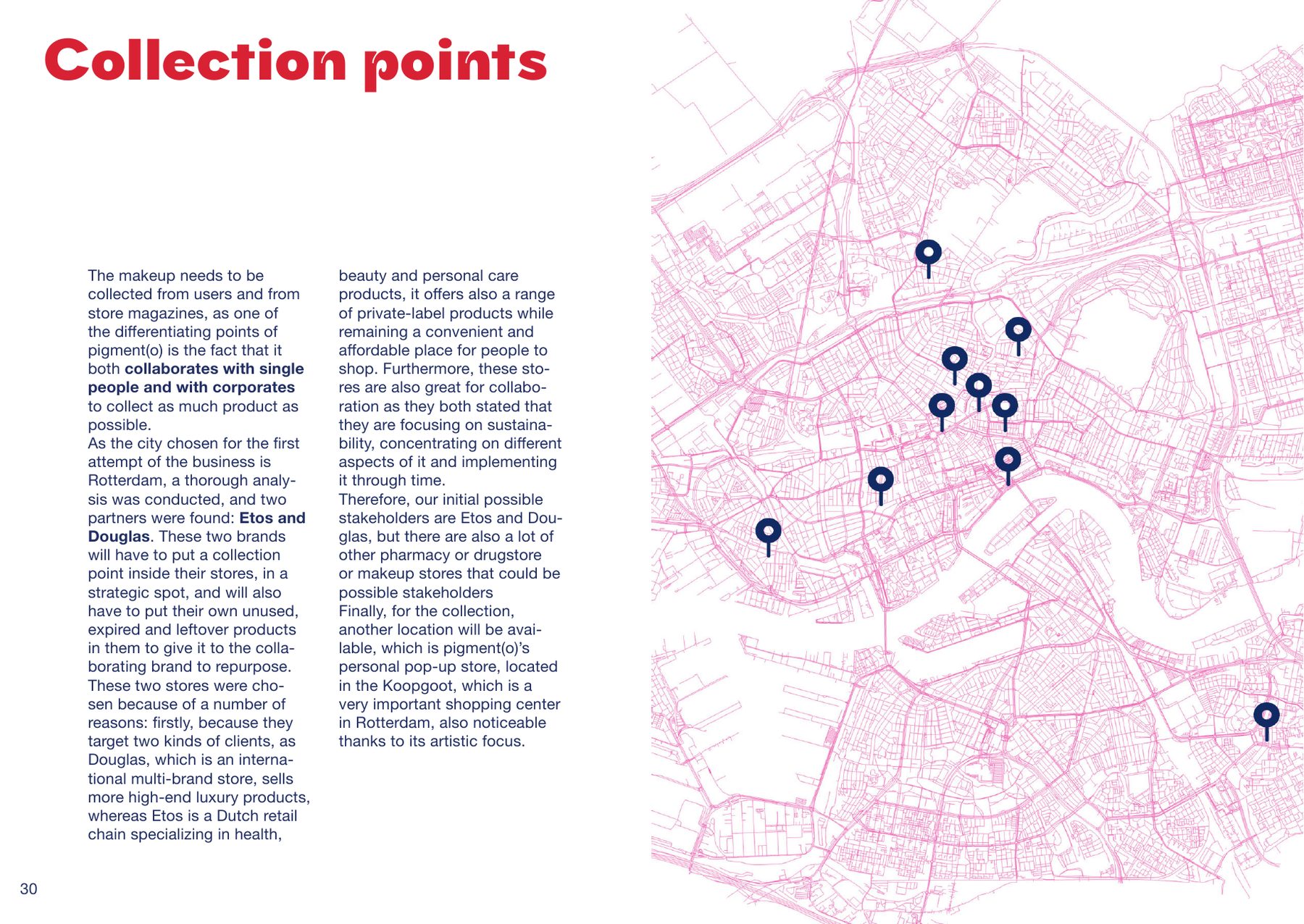
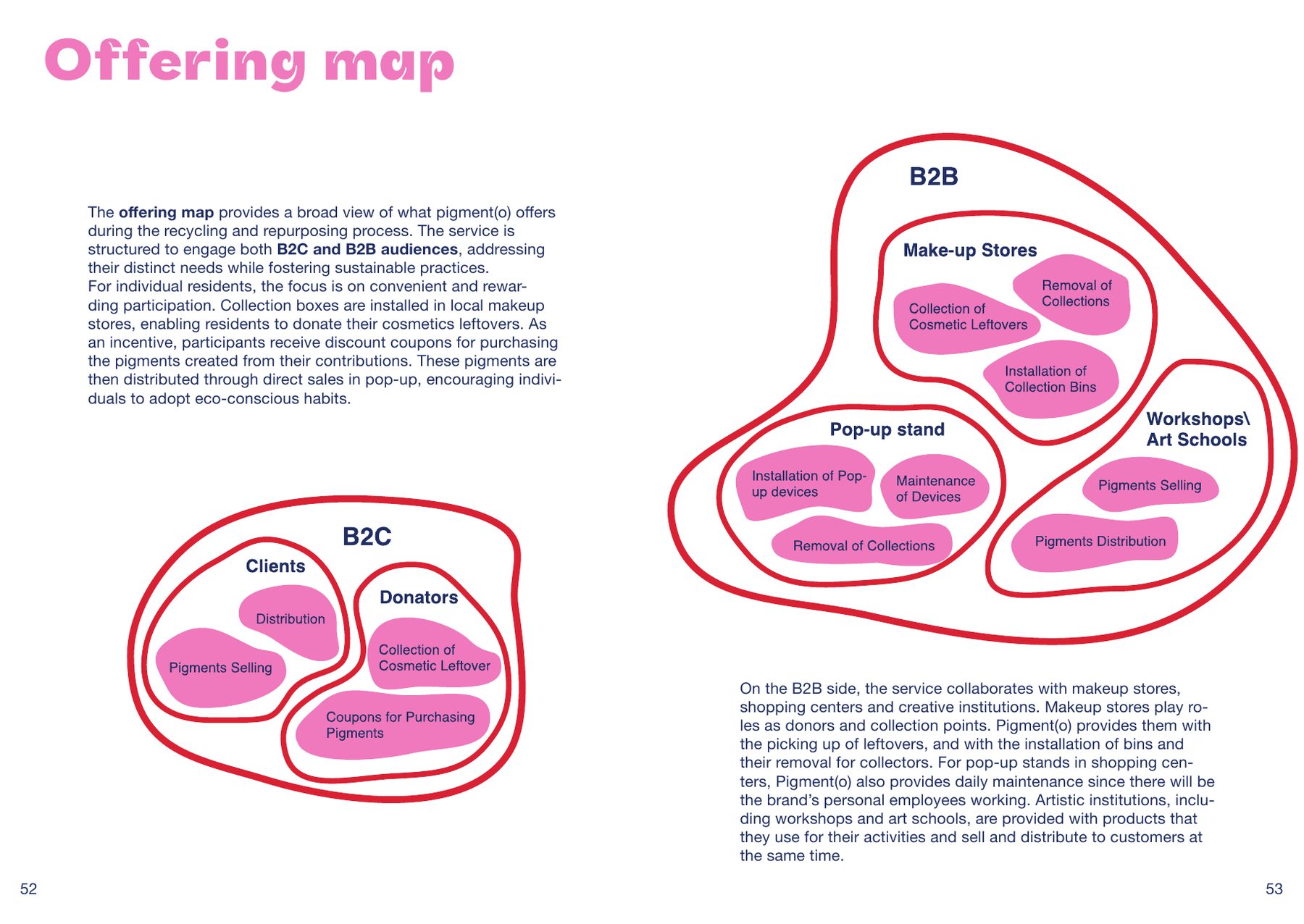
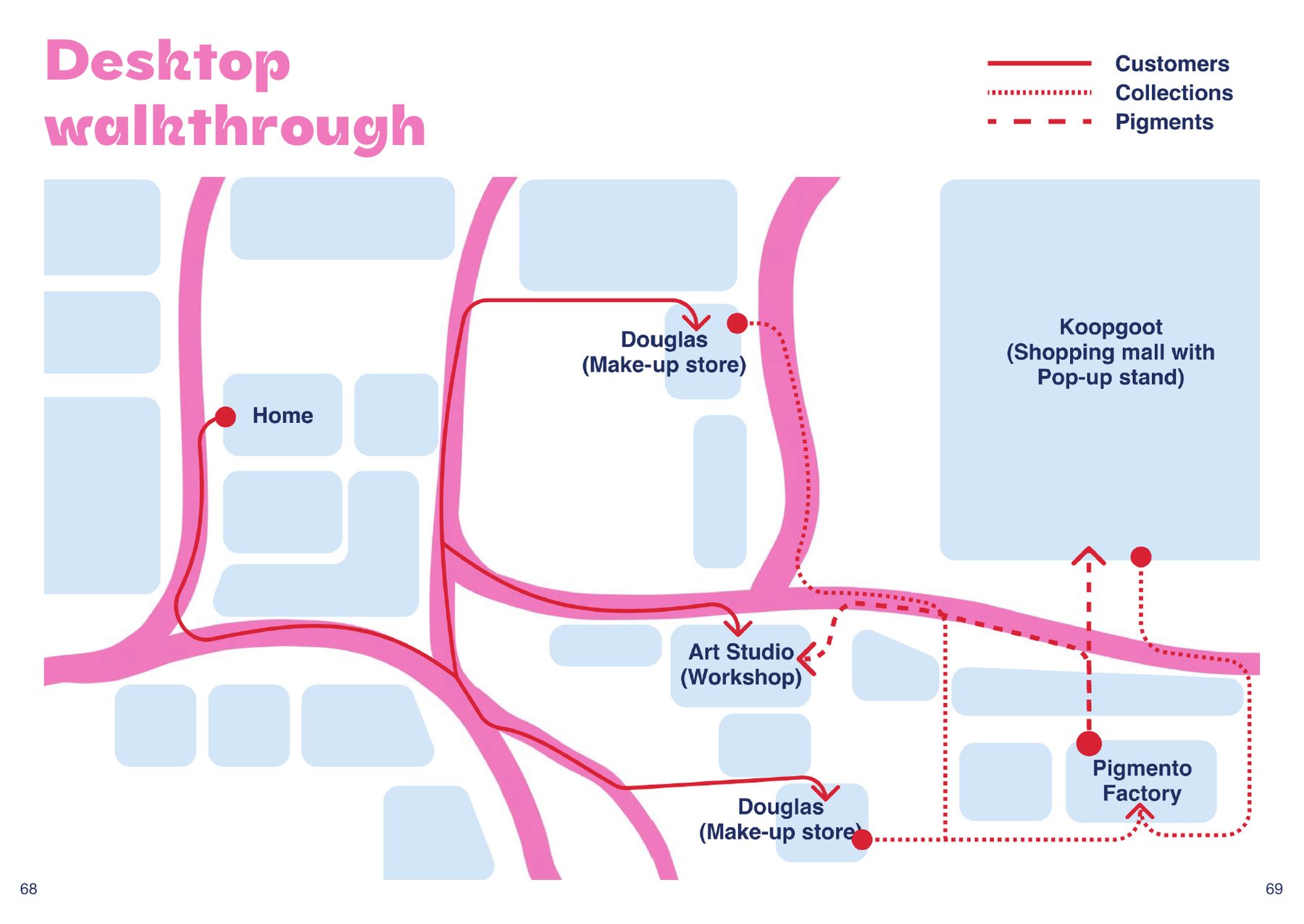
Make-up is collected from people and from stores. The first partners are Douglas, a high-end multi-brand store, and Etos, an affordable Dutch drugstore chain: both host a collection point and give their own unused and expired products.
Paint is sold through three channels: at partner workshops such as The Social Hub and Sip ’N Paint Rotterdam, where people buy it after trying it; at the pop-up store in the Koopgoot, the busy passage in the city centre; and online.
4
ProductMake-up to paint
4.1Pigment(o) paint
Three kinds of make-up, two kinds of paint.
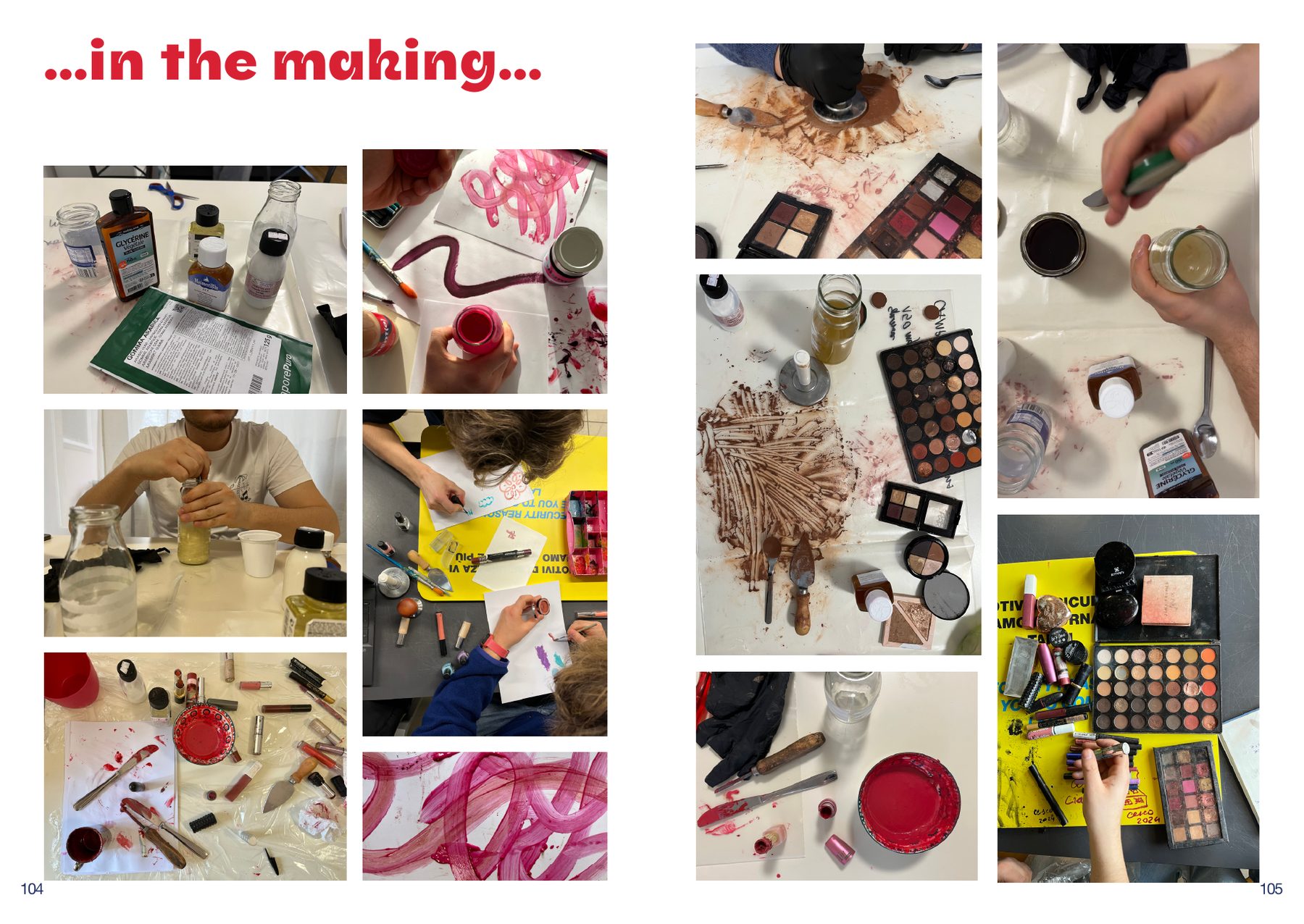
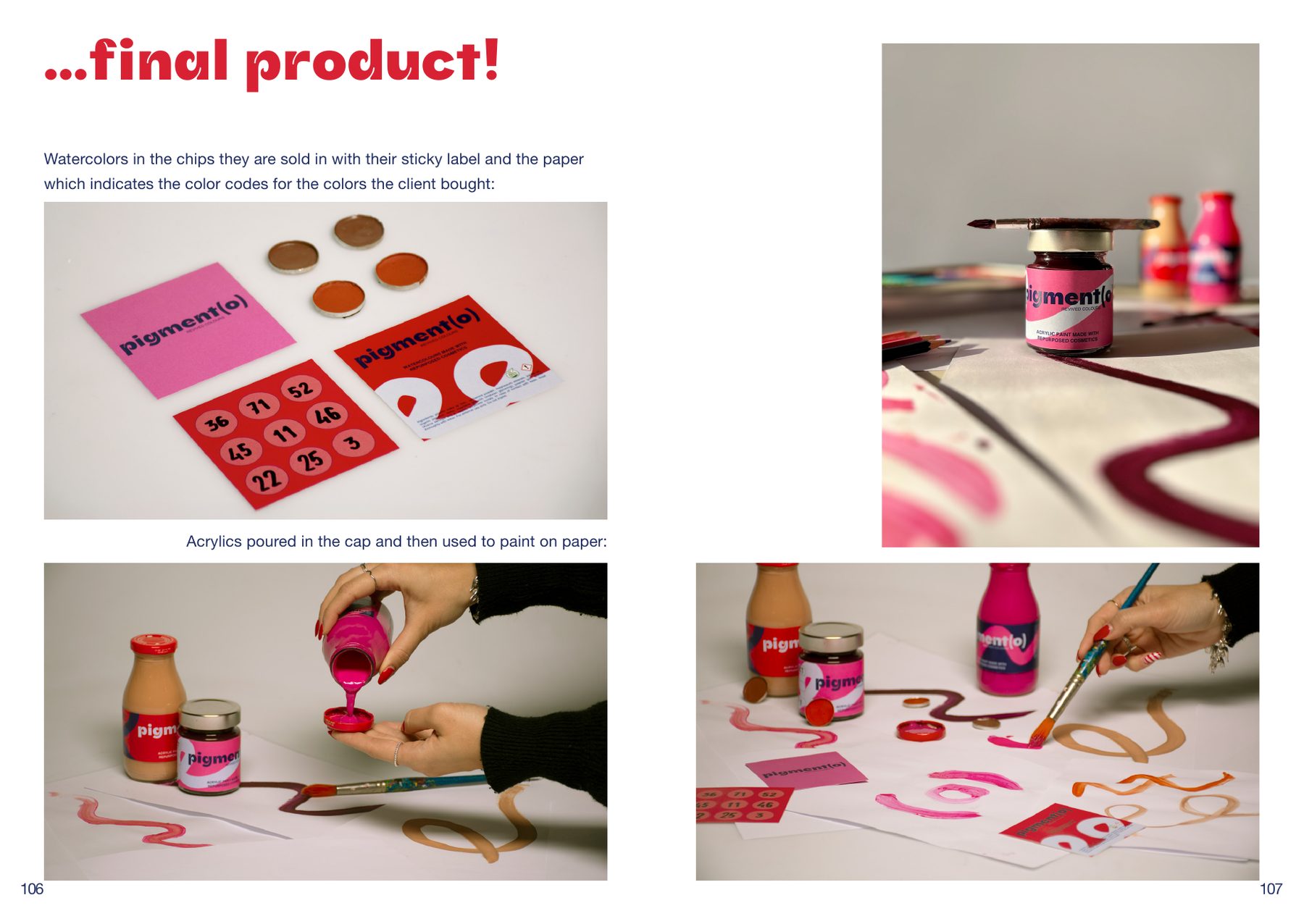
People bring powder (blush, highlighter, eyeshadow), stick (lipstick, blush, bronzer) and liquid make-up (concealer, foundation, lip tint). Melted stick and liquid make-up is mixed with acrylic medium, gloss medium and gum arabic to make acrylics; powder is mixed with a binder of water, gum arabic, glycerin and honey to make watercolours.
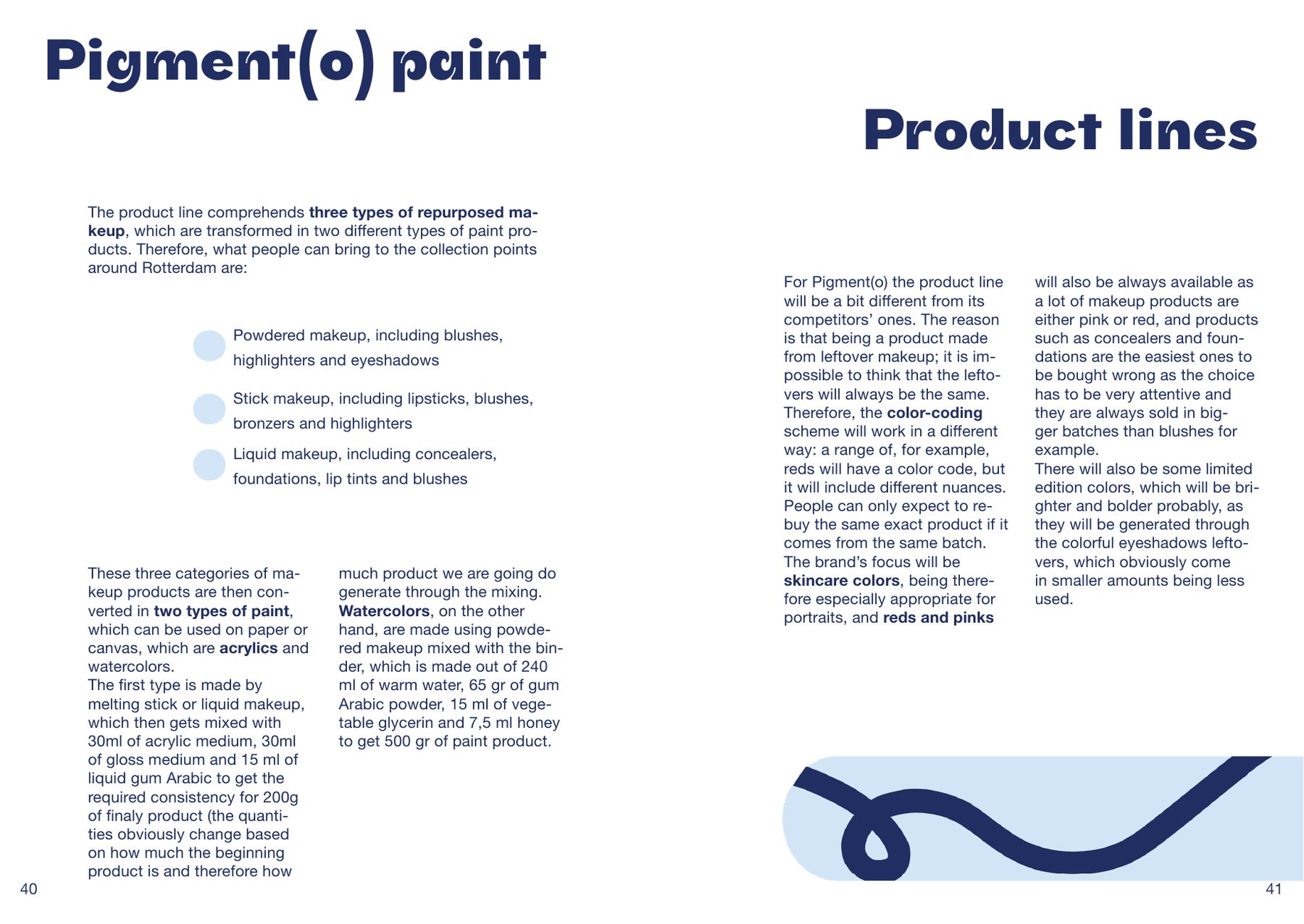
Colours depend on what people bring, so a code covers a family of nuances and the exact shade only repeats within a batch. Skin tones are the core — perfect for portraits — with reds and pinks always available and bolder limited editions from colourful eyeshadows.
If 74% of adult women in Rotterdam returned their unused make-up, about 1.09 million items would become roughly 10,600 kg of paint, after a 25% margin for unusable products.
4.2Packaging & labels
Refill first.
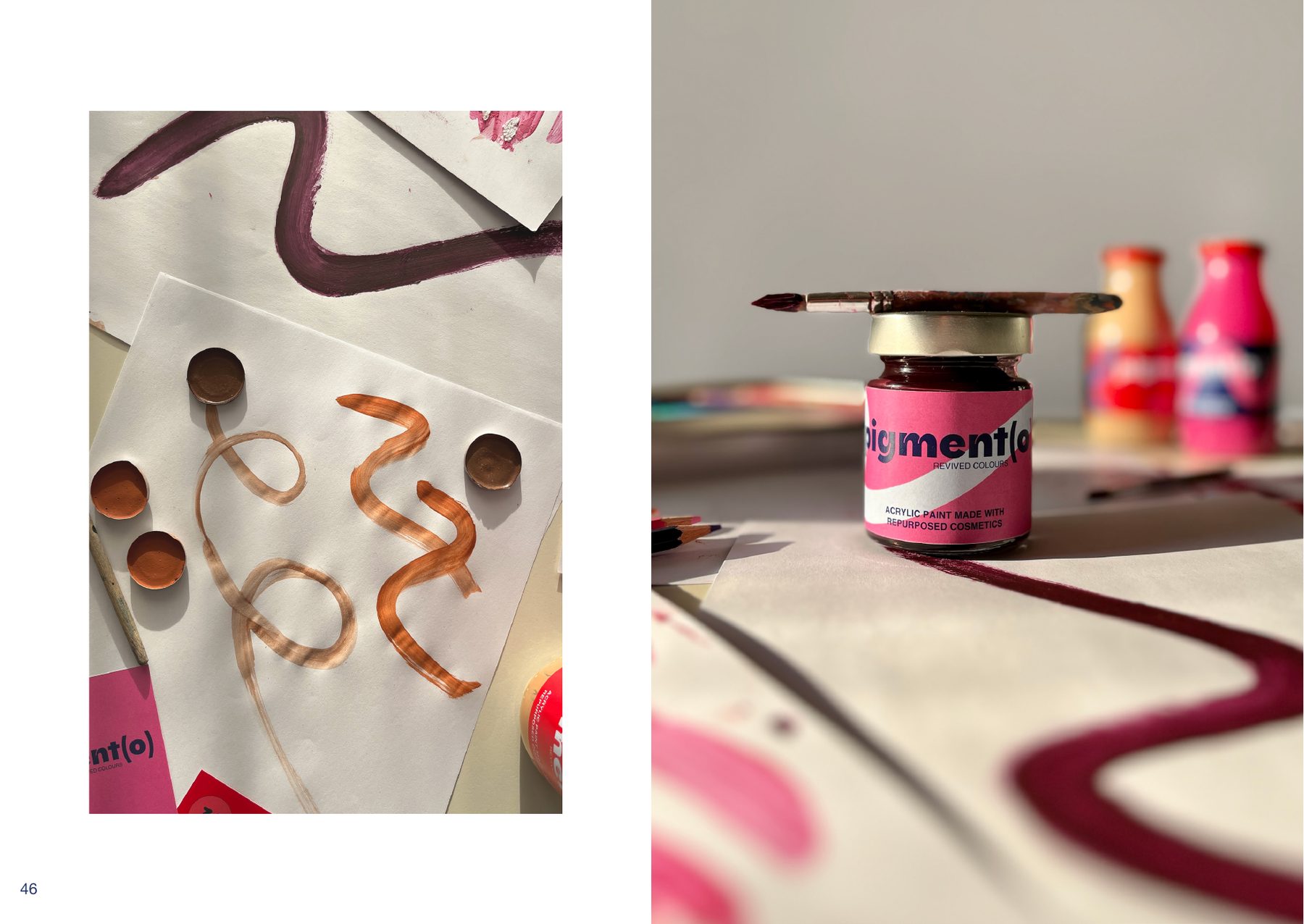
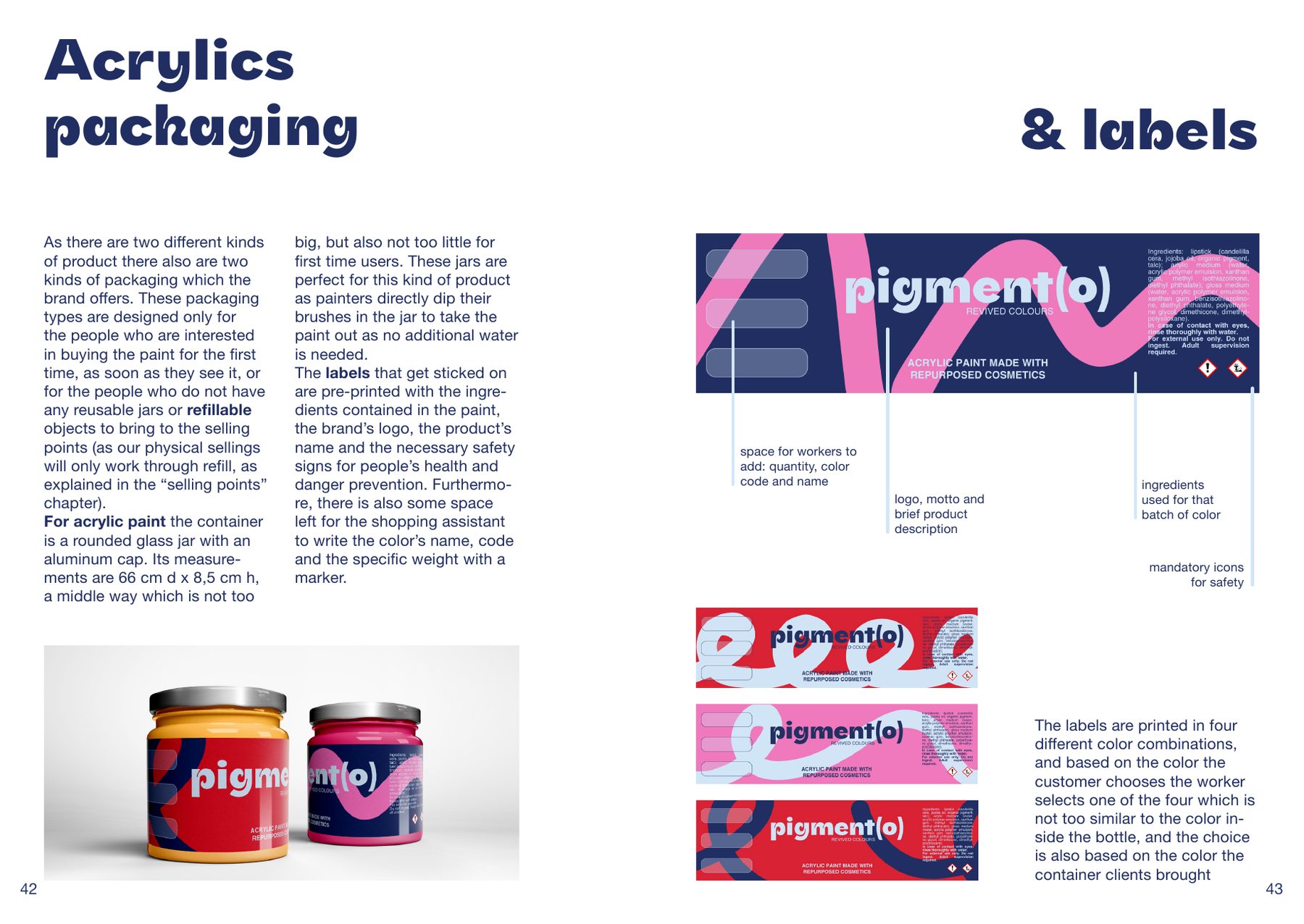
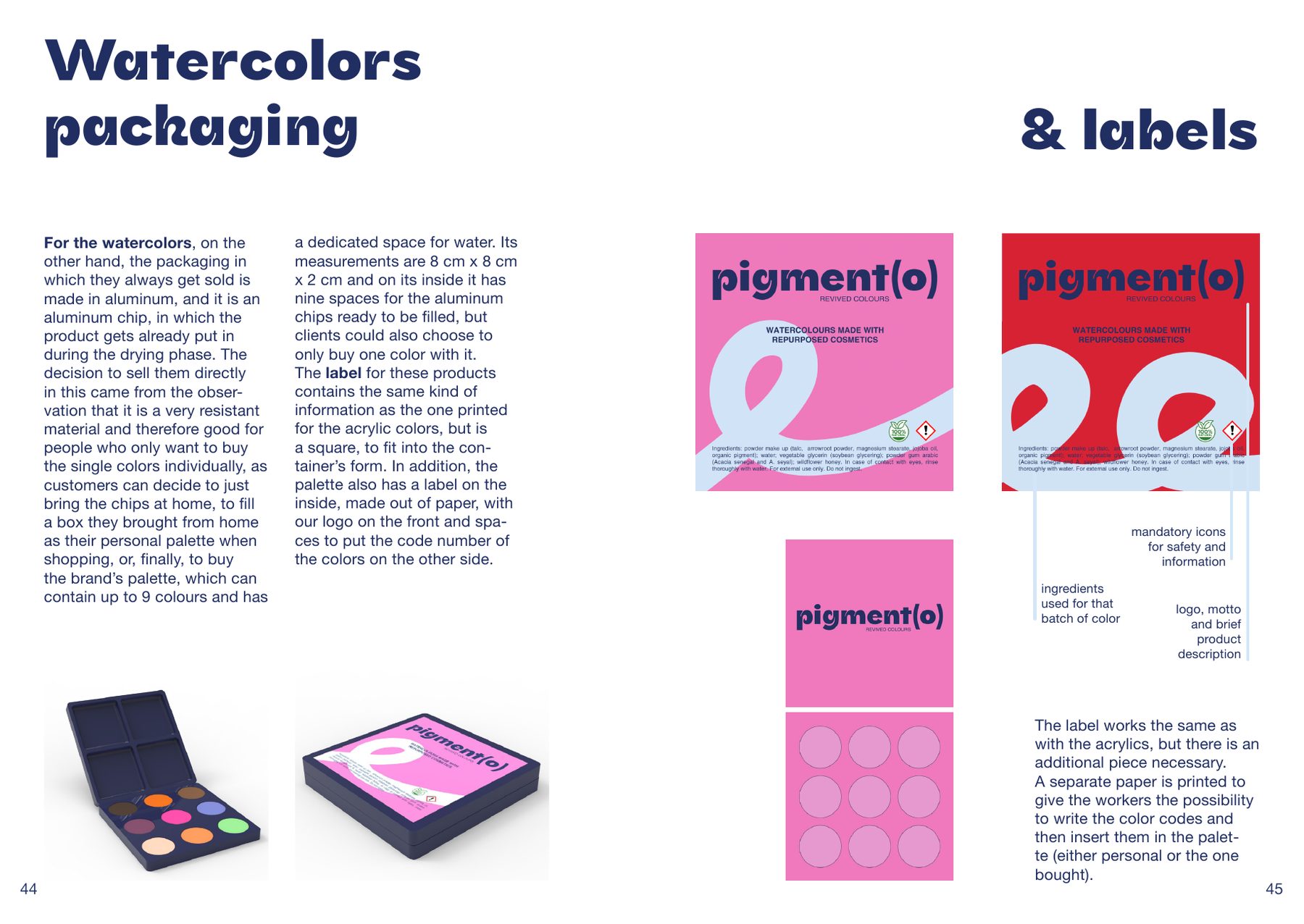
Physical points work by refill; packaging is for first-time buyers or people without a container. Acrylics come in a rounded glass jar with an aluminium cap, made to dip the brush straight in. Watercolours dry directly in aluminium pans, sold one by one or in a 9-colour palette with a space for water.
Labels are pre-printed with logo, ingredients and safety icons, leaving space for the shop assistant to write colour name, code and weight. They come in four colour combinations, chosen to contrast with the paint inside.
5
ServiceThe system
5.1What is pigment(o)
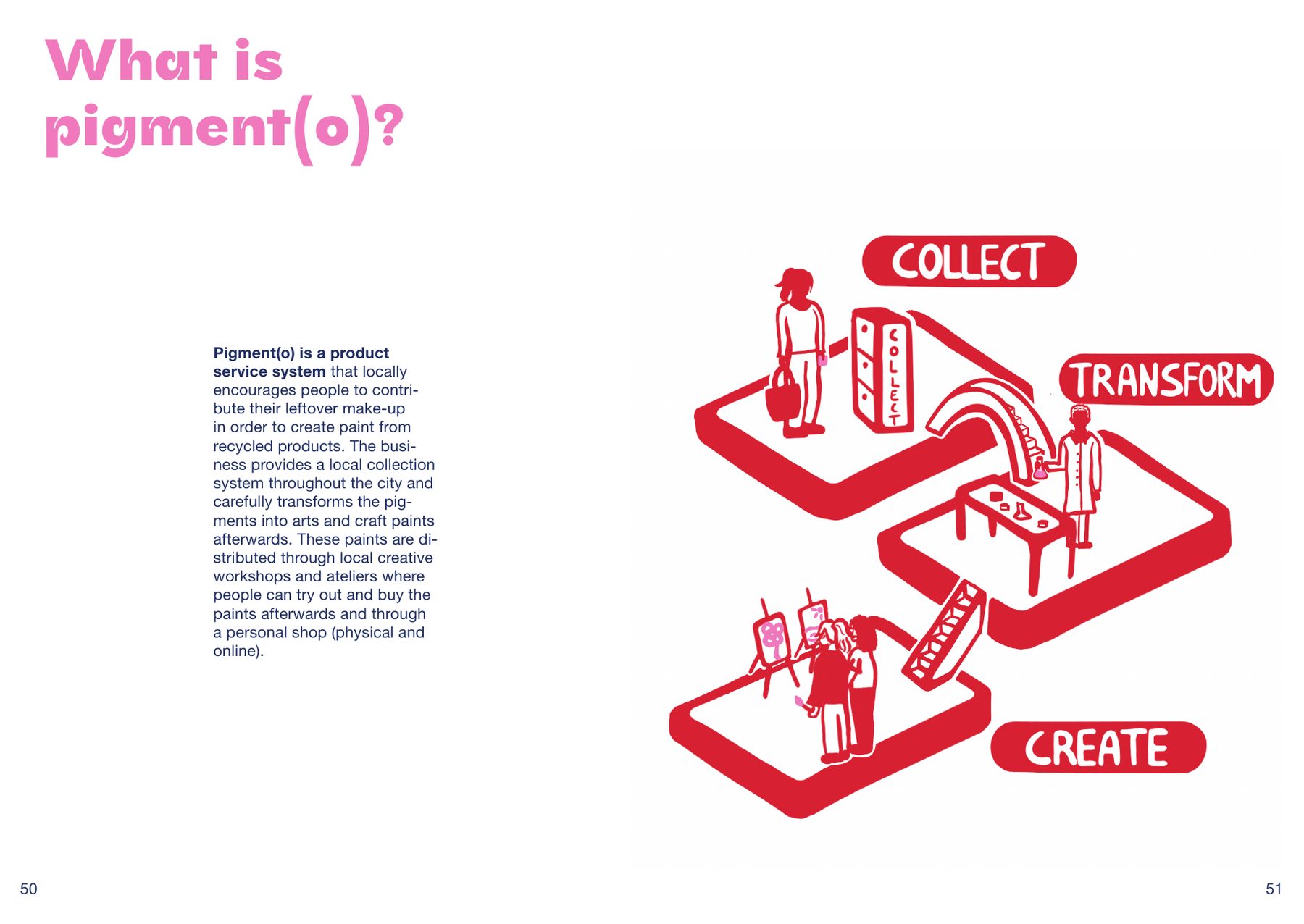
Collect, transform, create.
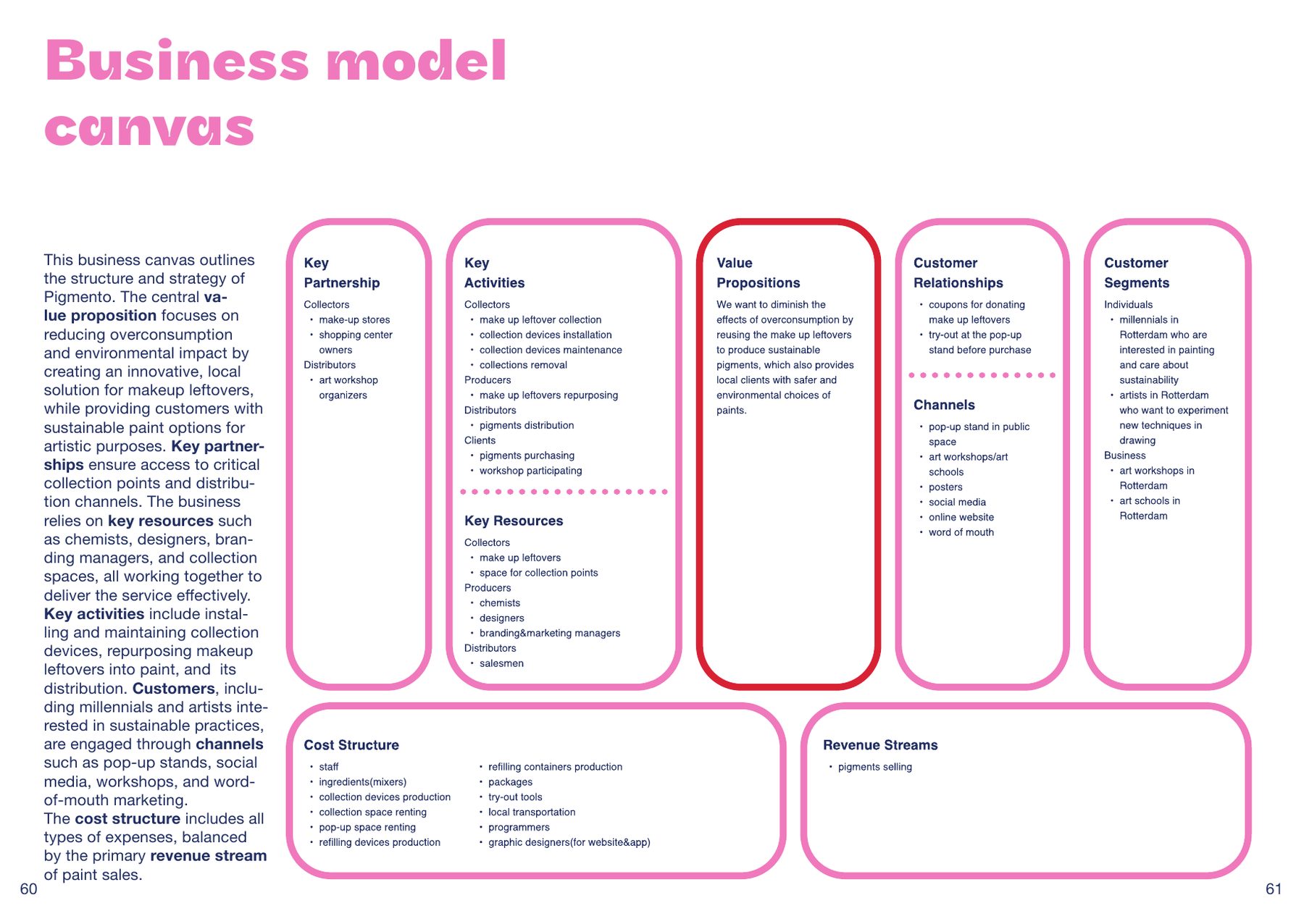
A product service system that encourages people to give their leftover make-up locally and turns the pigments into arts and crafts paints, distributed through creative workshops, ateliers and its own shop. Residents get discount coupons on the paint made from their donations; stores get a sustainable way to dispose of their stock.
5.2Stakeholders & system
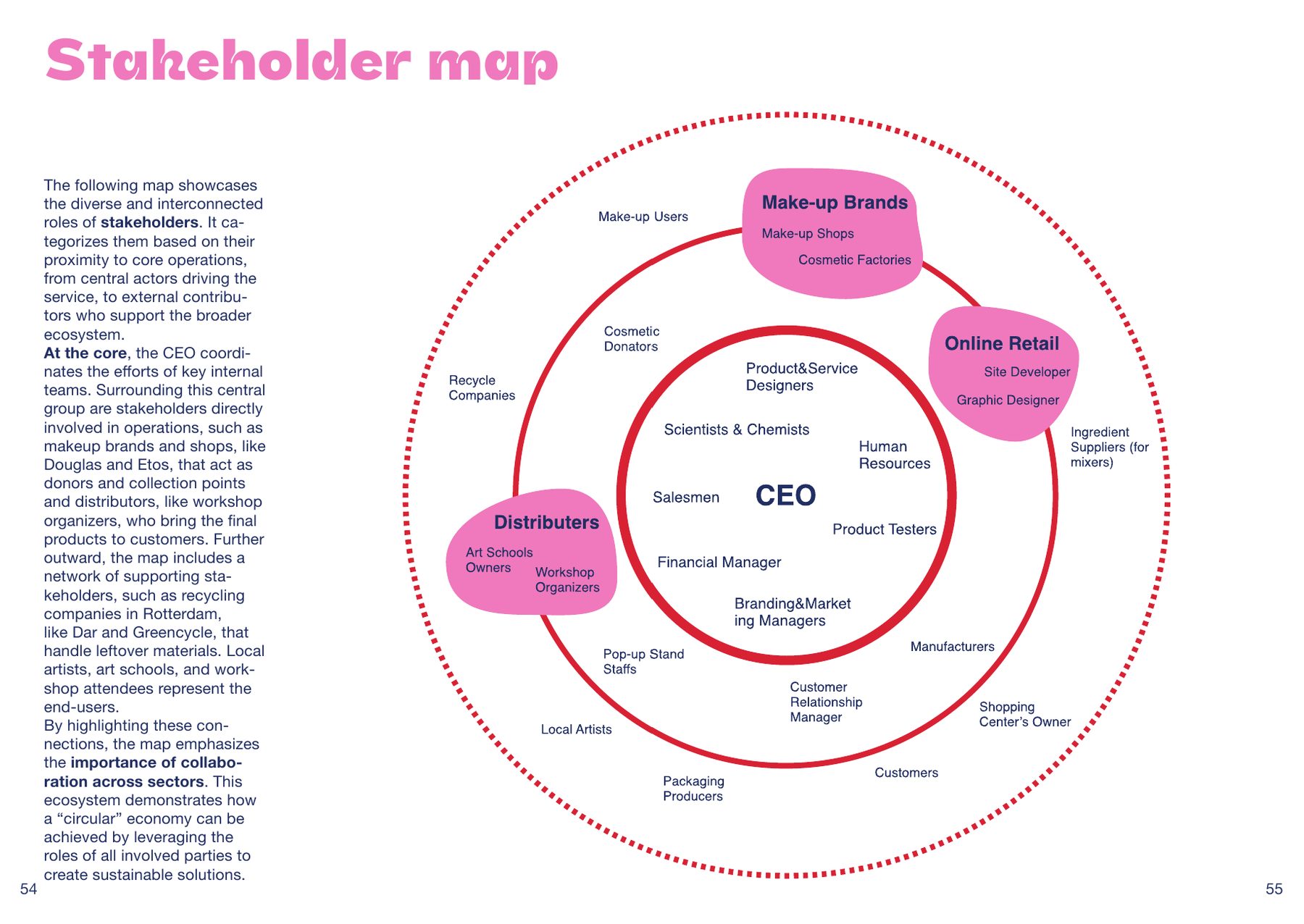
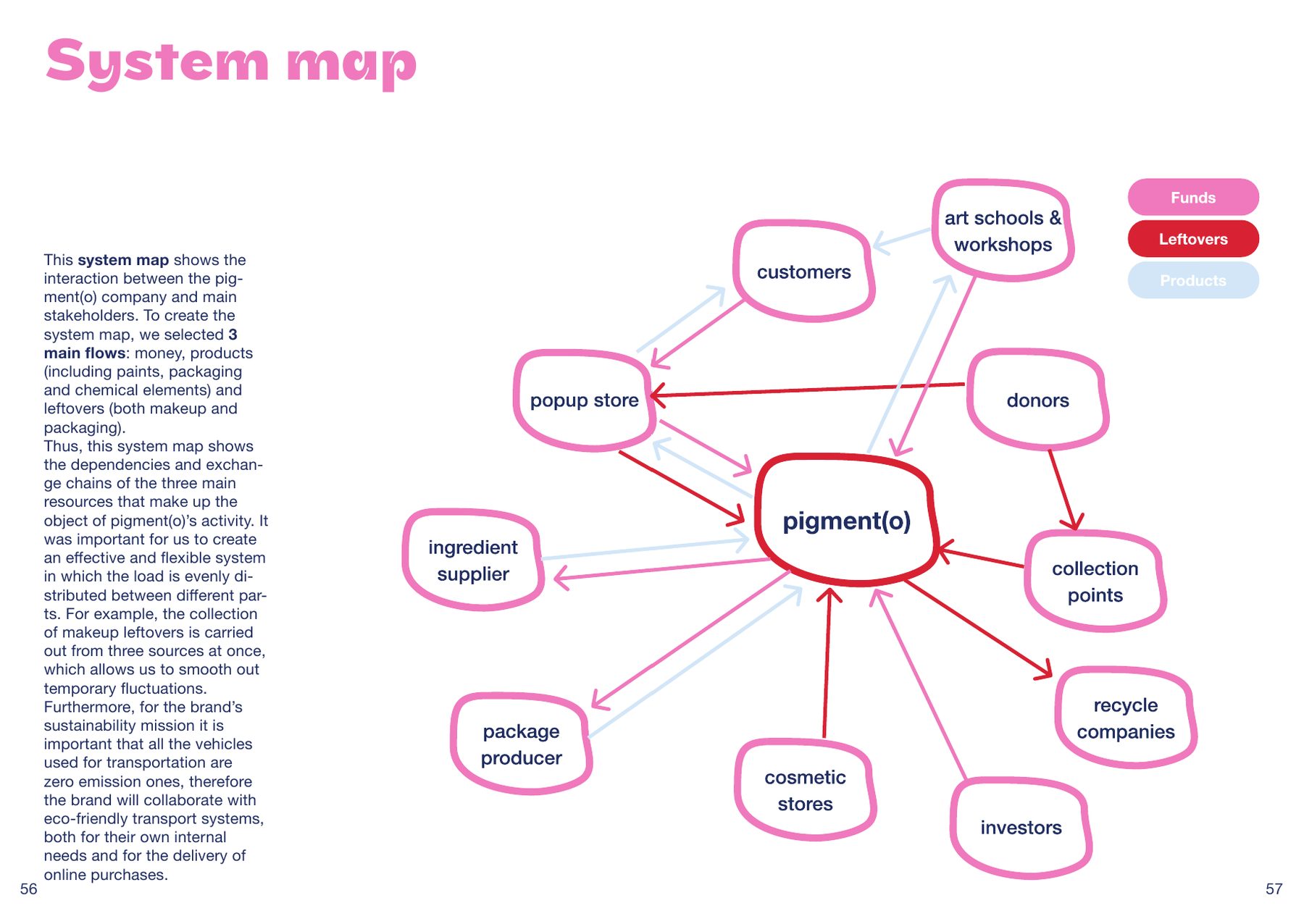
Three flows: money, products, leftovers.
At the core, the CEO coordinates the internal teams. Around them: make-up brands and shops like Douglas and Etos as donors and collection points, workshop organisers as distributors, recycling companies in Rotterdam for leftover packaging, and local artists, art schools and workshop attendees as end users.
Make-up is collected from three sources at once, which smooths out fluctuations, and all transport is zero-emission.
5.3Touchpoints & model
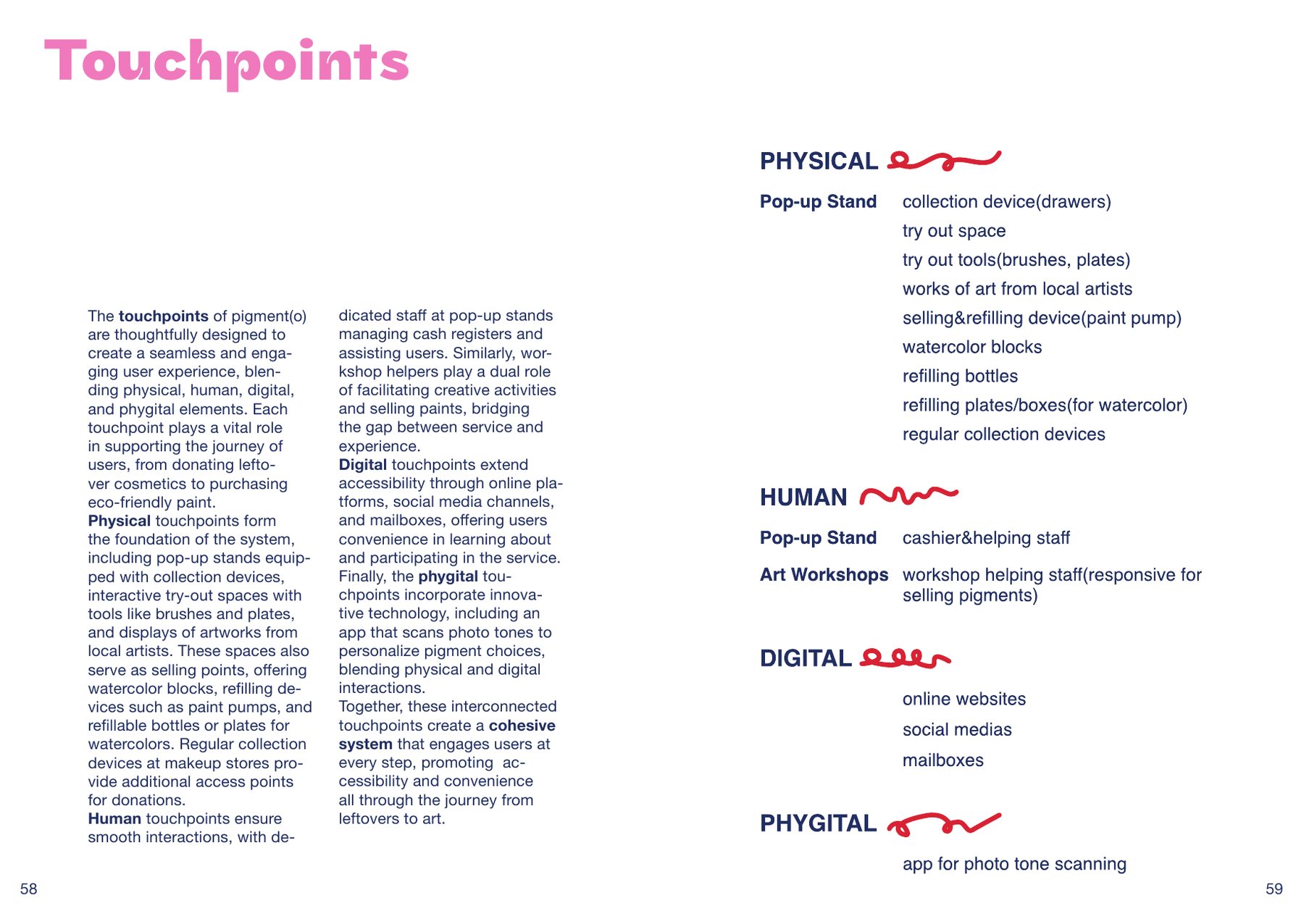
Physical, human, digital, phygital.
Pop-up stands with collection drawers, try-out spaces and artworks by local artists; refill pumps and watercolour blocks; staff and workshop helpers who also sell the paint; website, social media and newsletters; and an app that scans a photo to suggest skin tones.
5.4Personas & journey
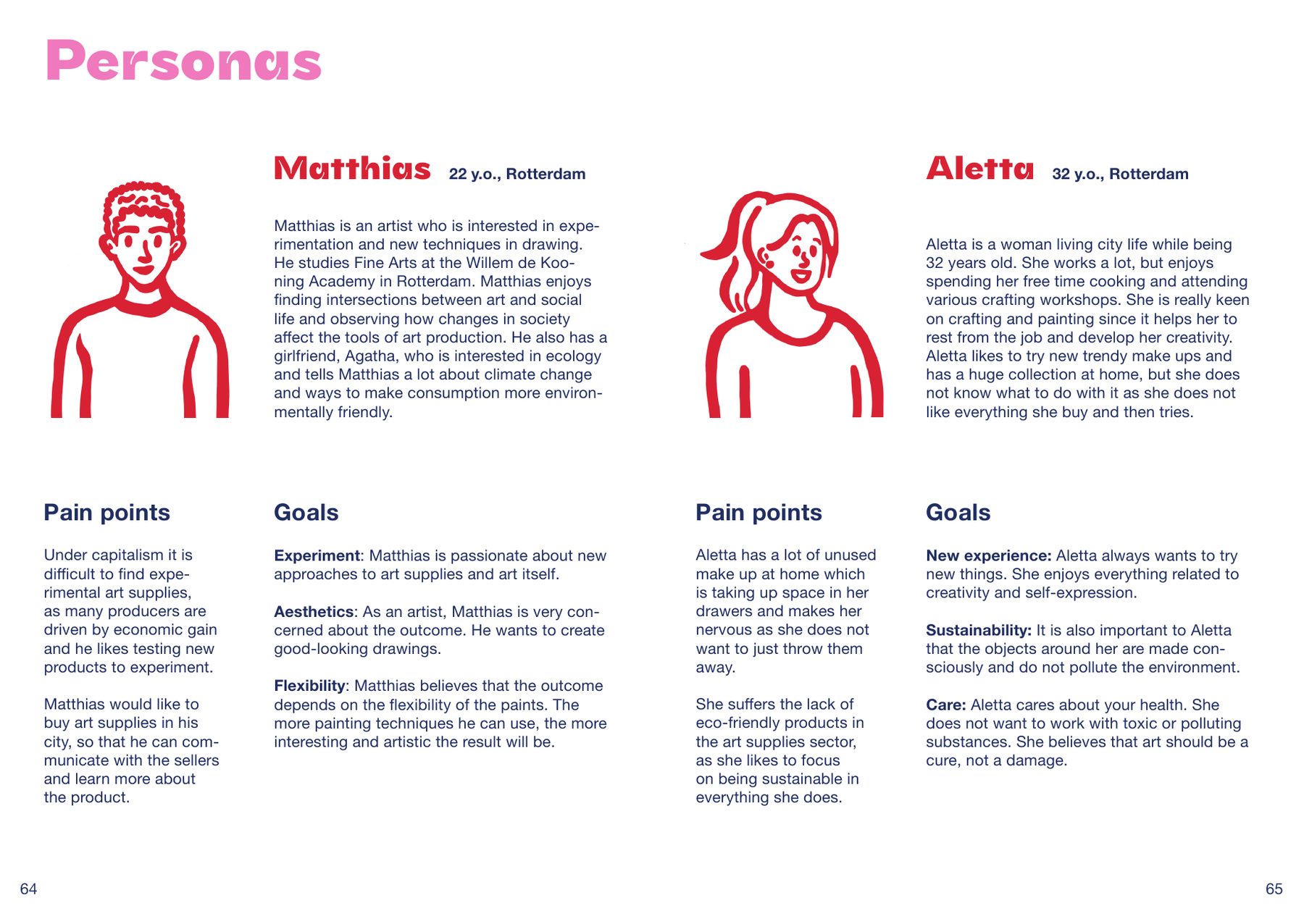
Matthias, the artist. Aletta, the collector.
Matthias
A Fine Arts student at the Willem de Kooning Academy who loves experimenting with new art supplies and wants to buy them locally, talking to the people who make them.
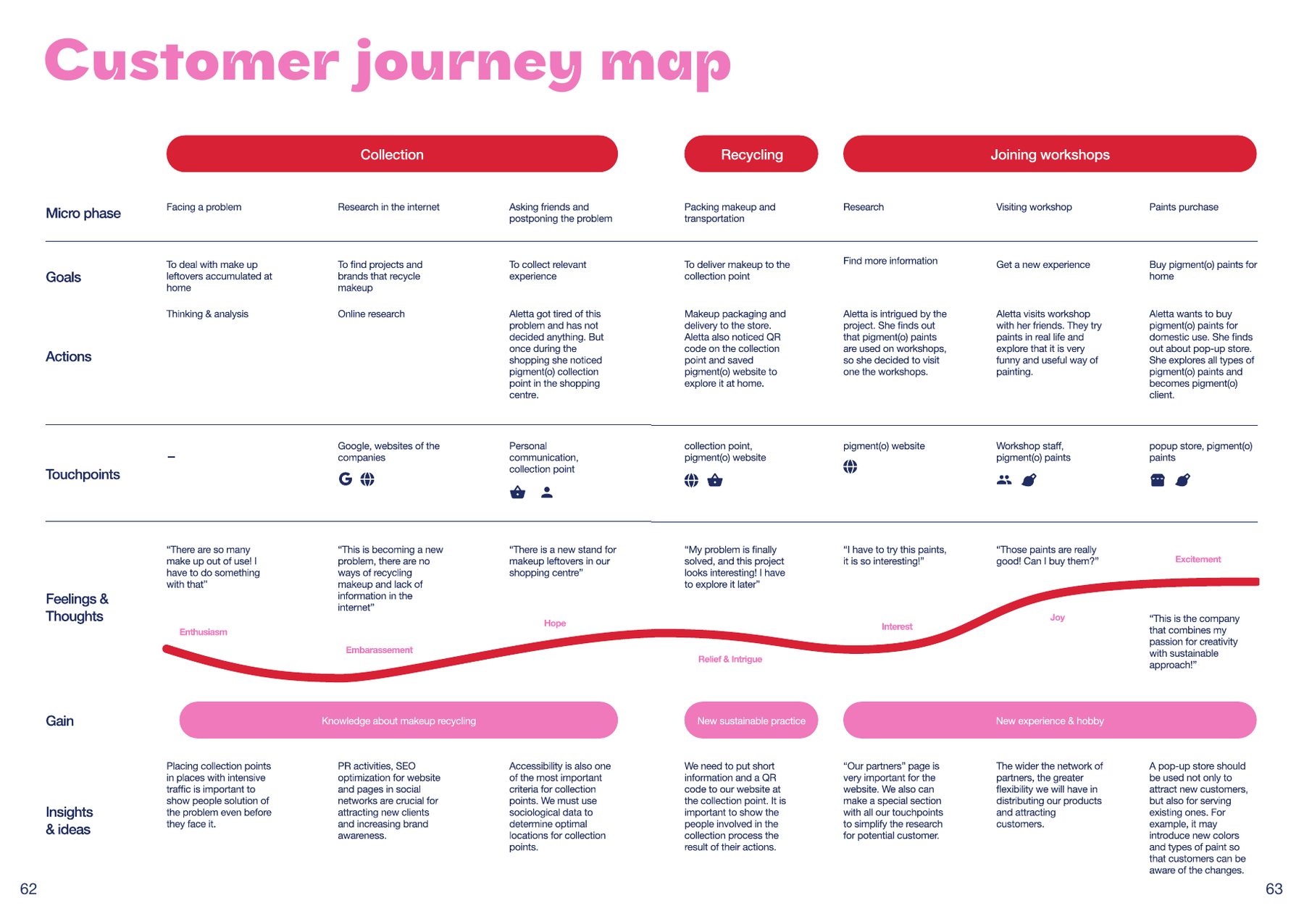
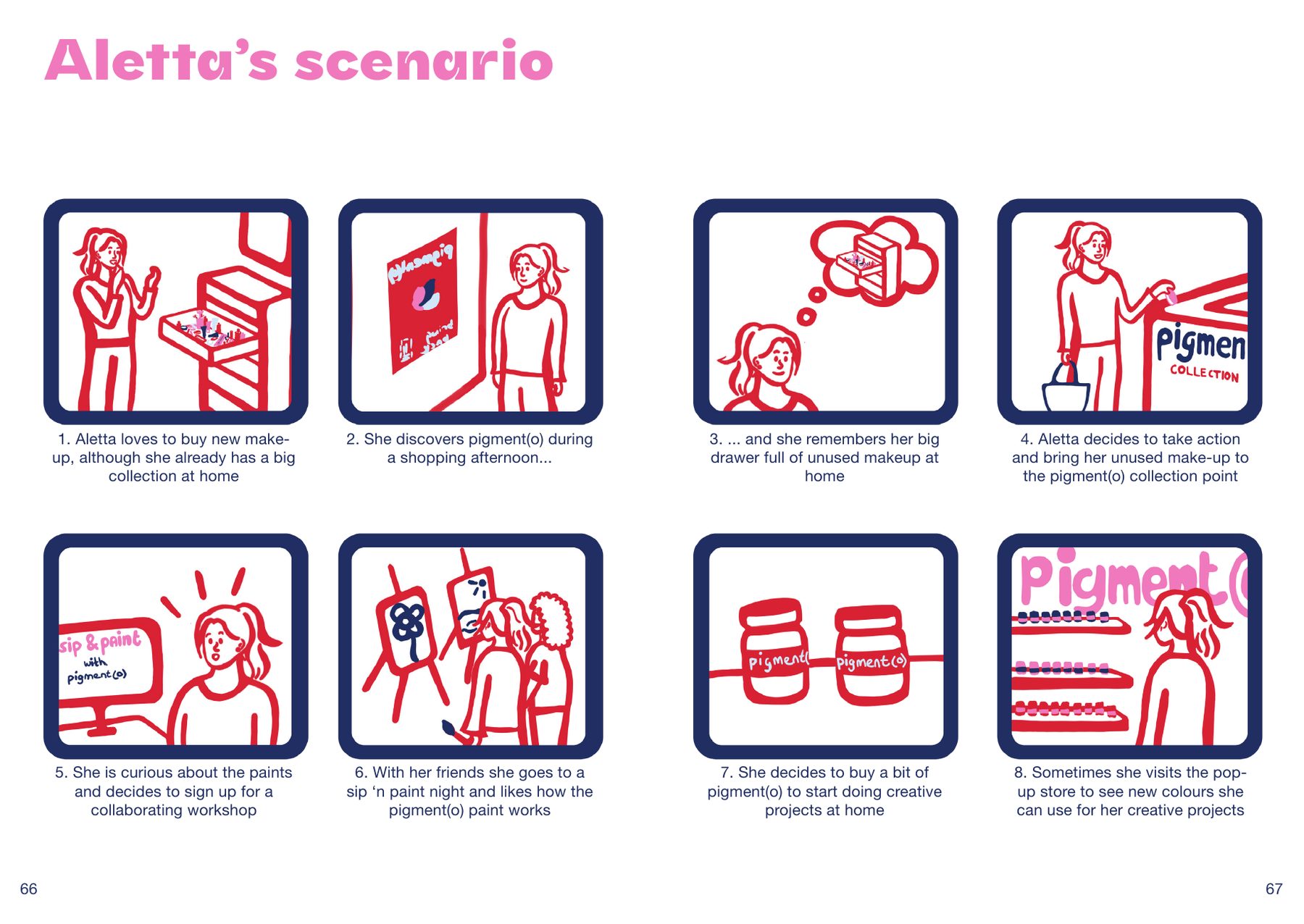
Aletta
Works a lot and relaxes in crafting workshops. She has a huge make-up collection she doesn’t use and doesn’t want to throw away, and looks for non-toxic, sustainable art supplies.
6
Collection pointsIn stores & pop-up
6.1In collaborating stores
Visible, easy, quick.
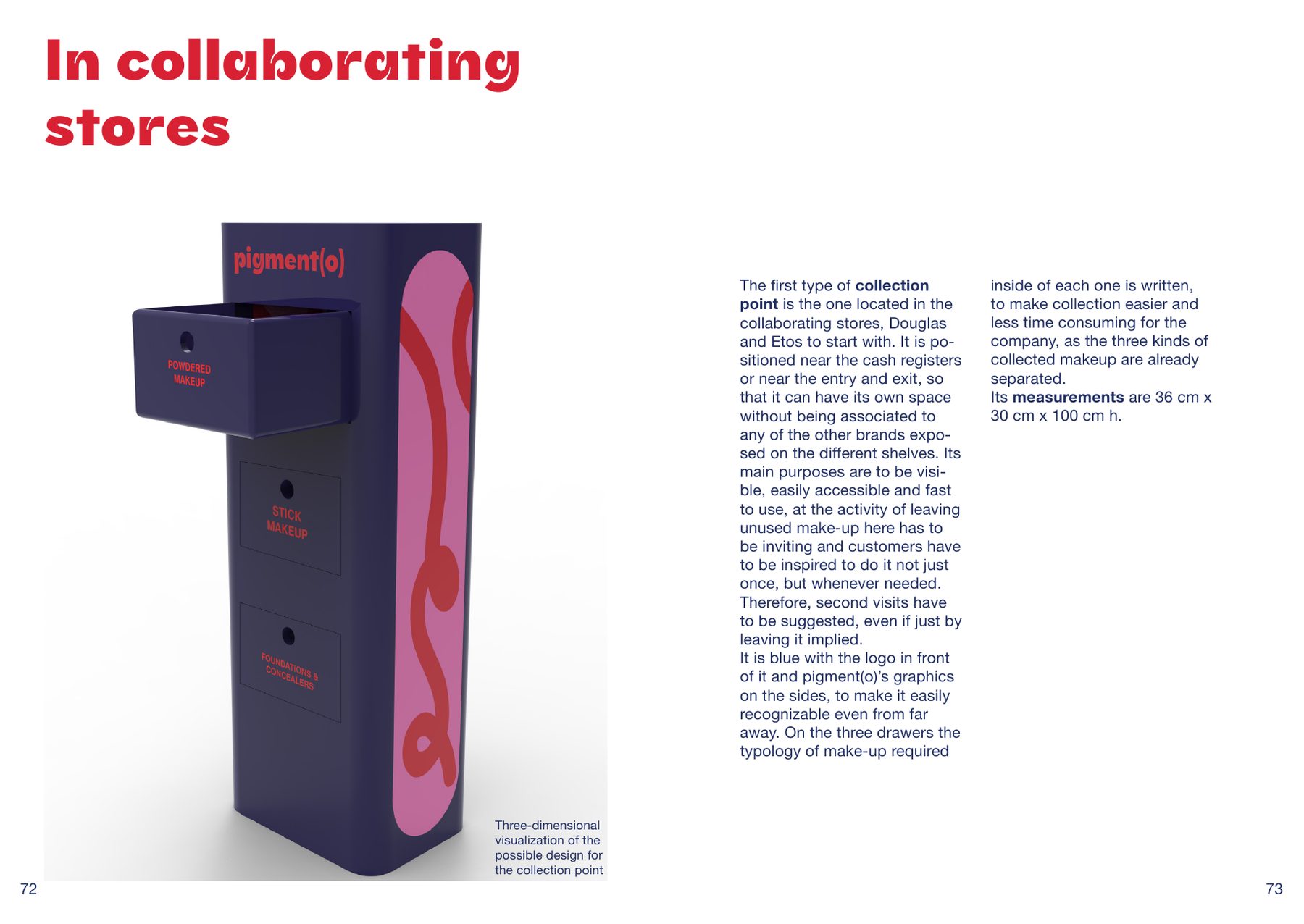
Near the tills or the entrance of Douglas and Etos, a blue totem with the logo and three drawers — one per type of make-up — so the collection is already sorted. 36 × 30 × 100 cm.
6.2Pop-up store
The (o) you can walk into.
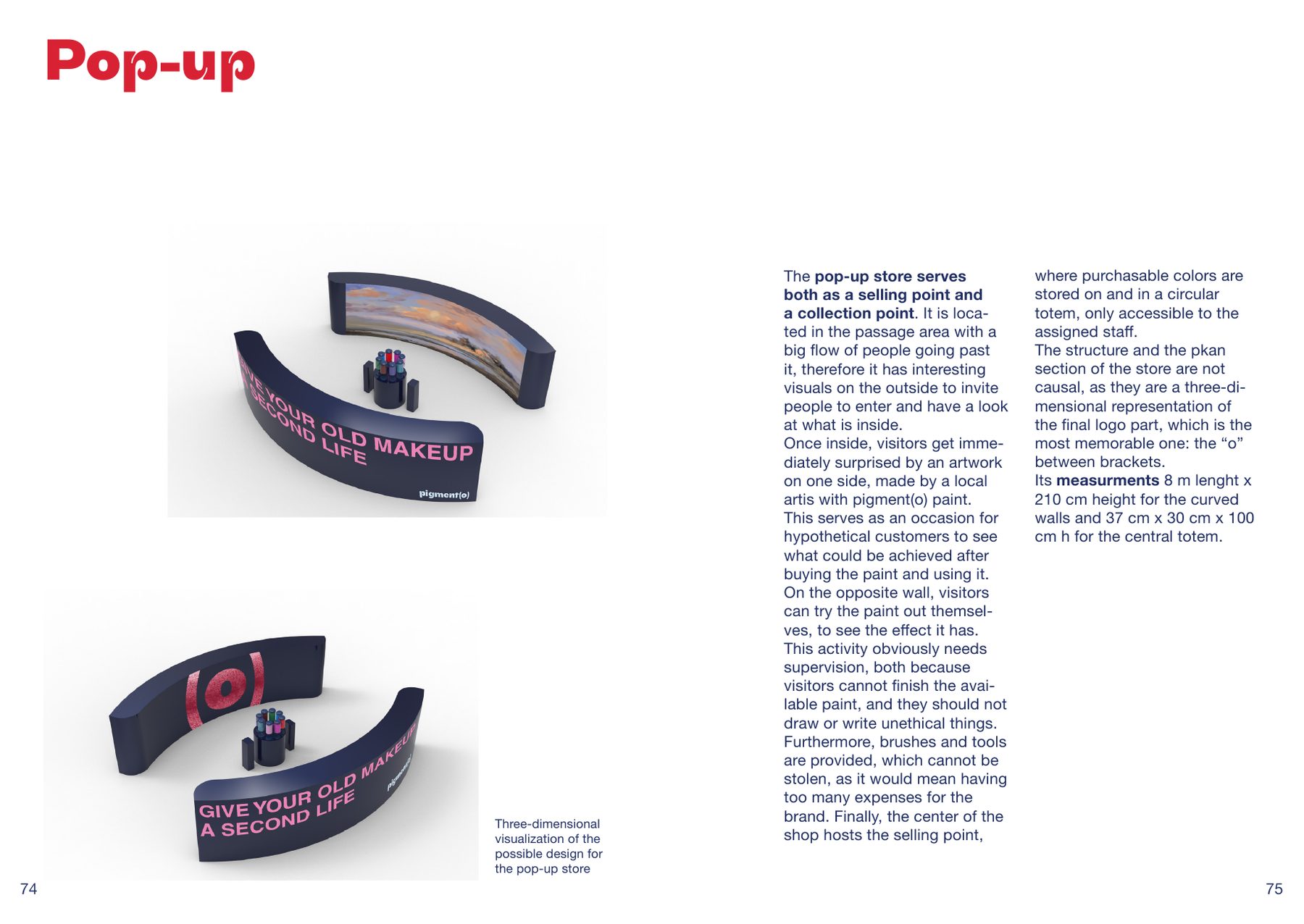
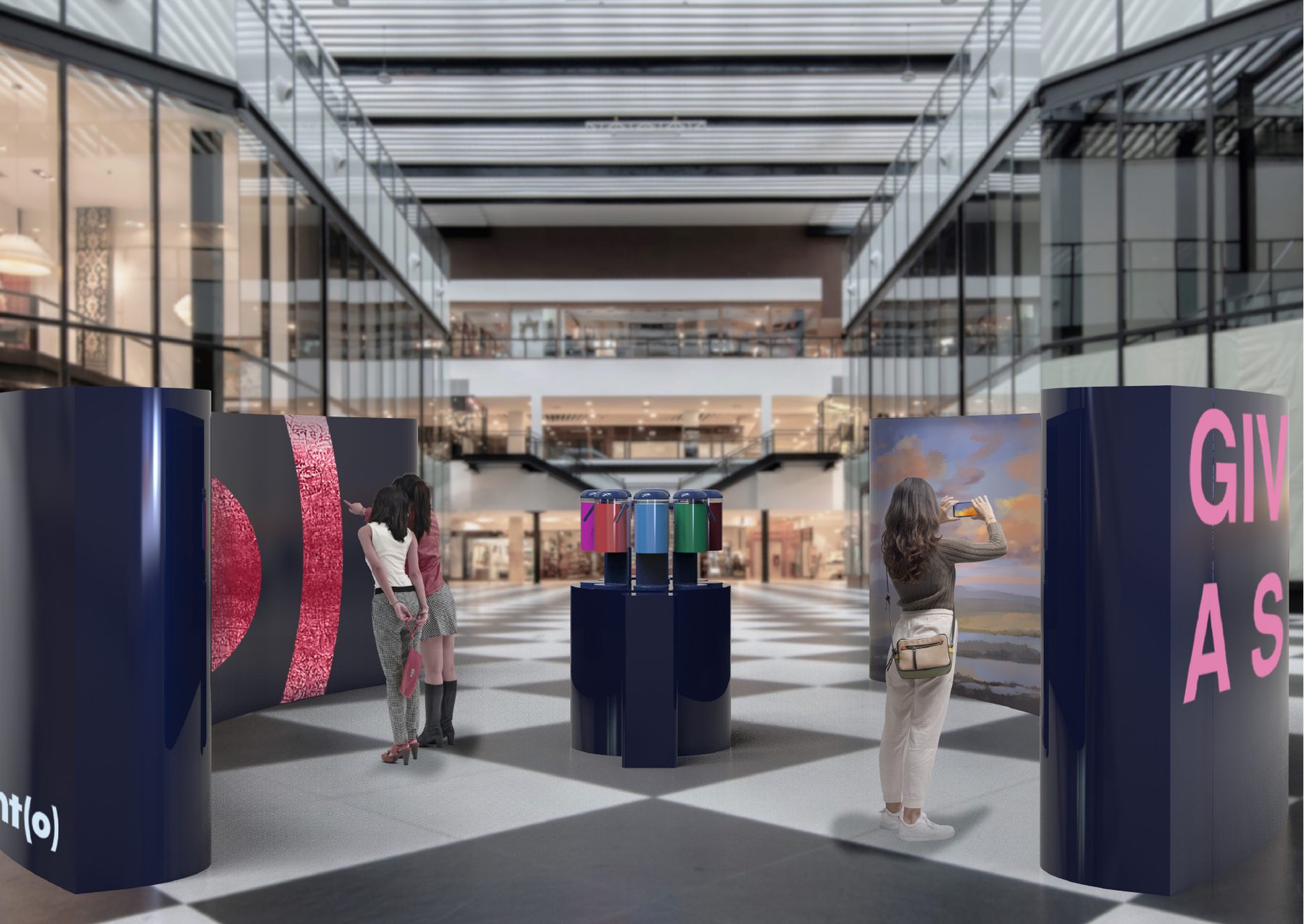
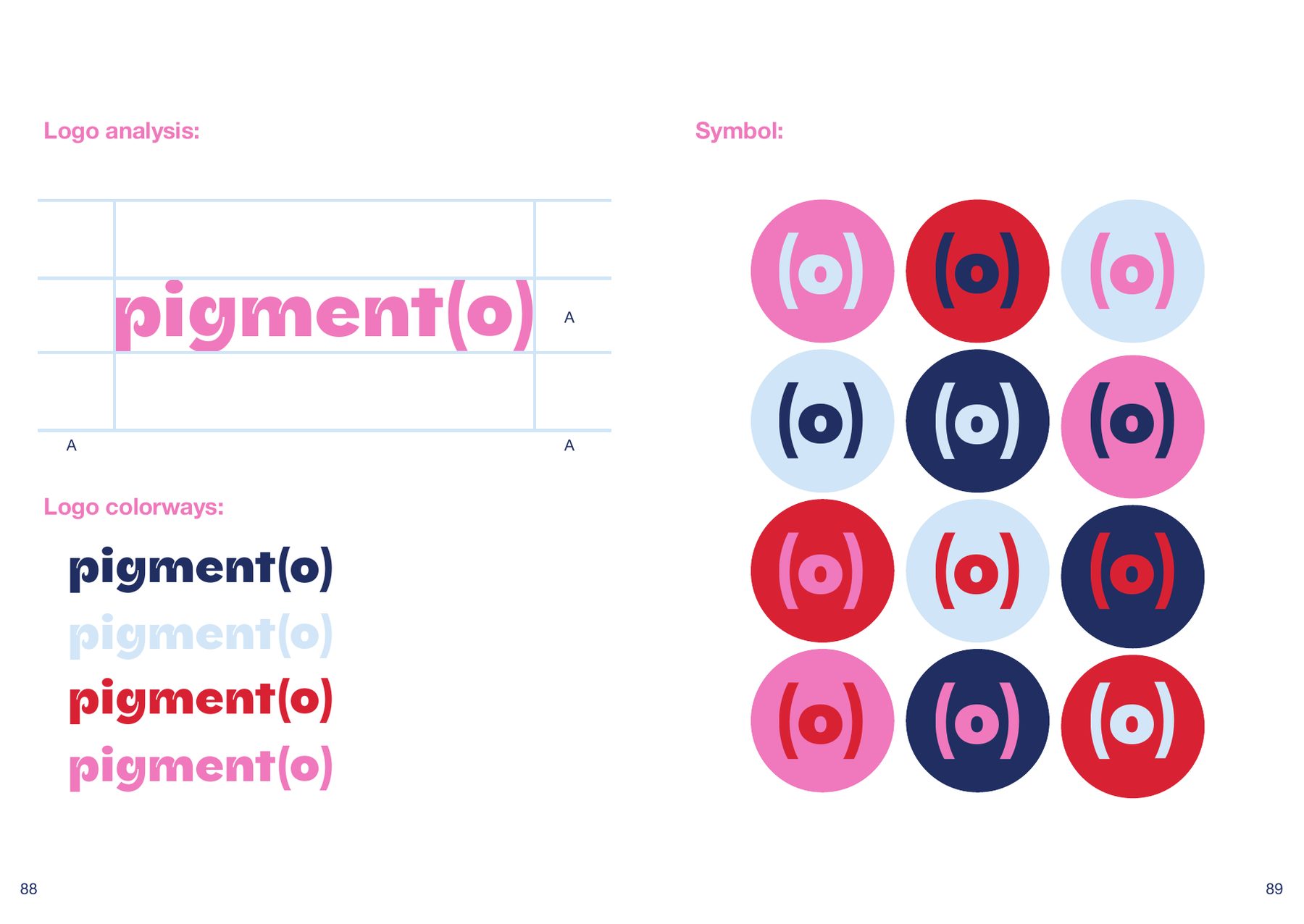
In the Koopgoot, the pop-up is both a selling and a collection point. Visitors find an artwork by a local artist made with pigment(o) paint, a supervised wall to try the paint, and a circular totem with the colours in the middle. Its curved walls are a 3D version of the most memorable part of the logo: the “o” between brackets.
7
BrandingRevived colours
7.1Mission & naming
No pigments to waste.
The mission is to change how people see cosmetic waste: pigments have a value beyond their first purpose. Not through heavy-handed activism, but with a friendly, positive and stylish tone that makes sustainability feel inviting.
Pigment is the thread between discarded make-up and the new paint; the (o) adds the Italian pigmento — the language of half the team. The tagline, Revived Colours, speaks of a second life.
7.2Visual identity
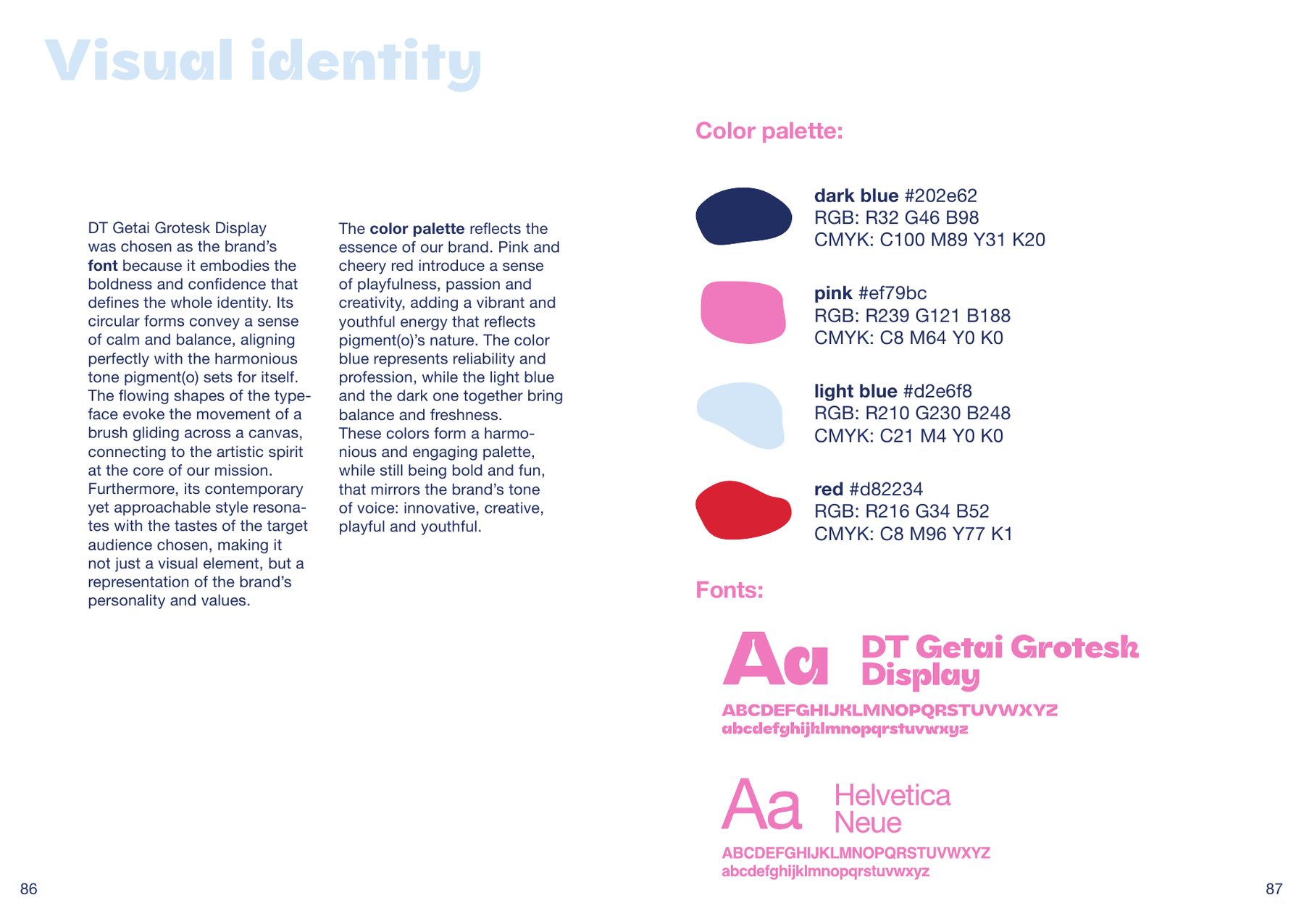
Pink and cherry red on dark blue.
Type: DT Getai Grotesk Display for headlines, Helvetica Neue for text.
7.3Campaign
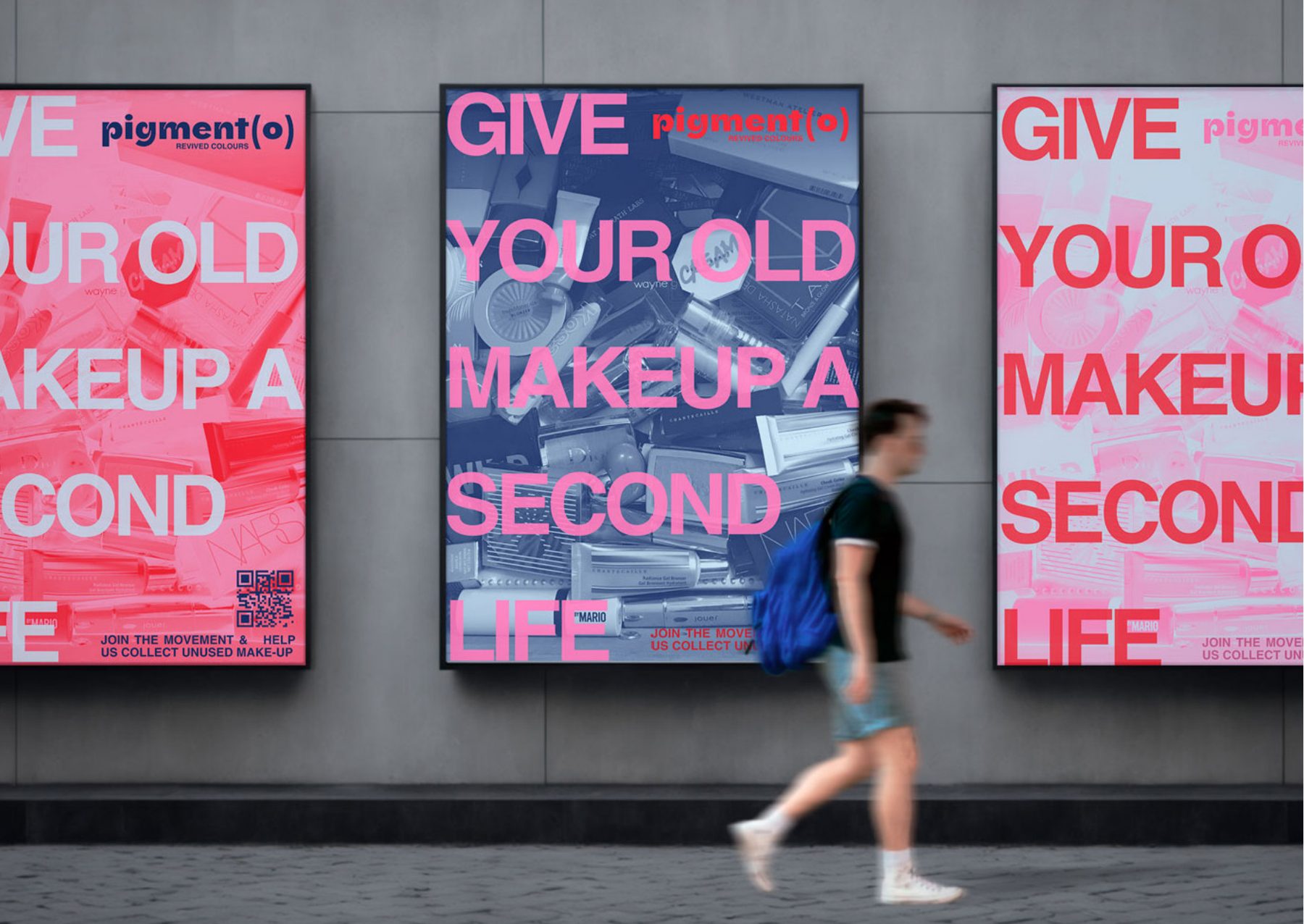
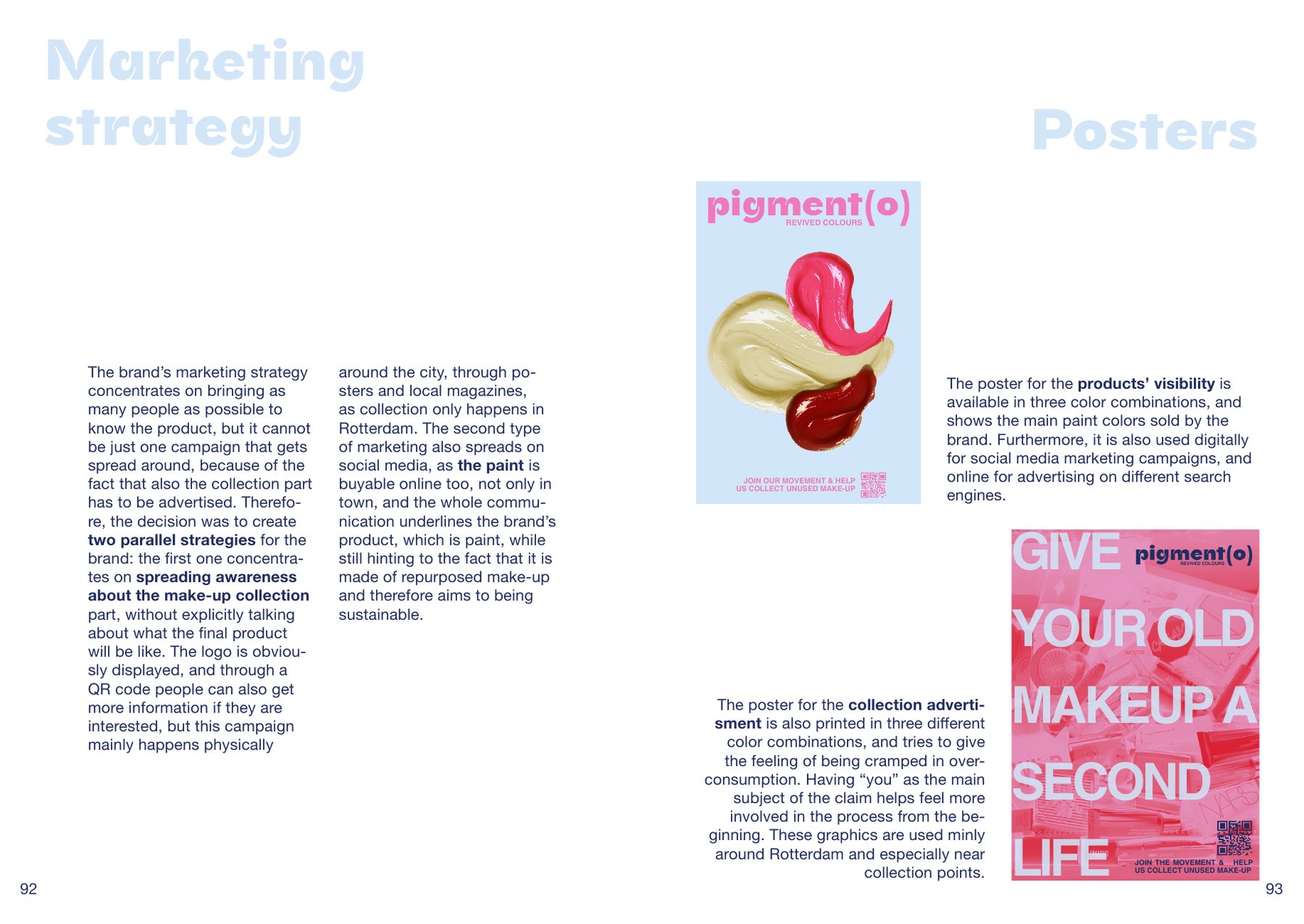
Give your old make-up a second life.
Two parallel campaigns: one, mostly on posters and local magazines around Rotterdam, invites people to bring their make-up; the other, also on social media, shows the paint while hinting at where it comes from.
Join the movement — help us collect unused make-up.
Nora
Fish stall for Senegal